Classes

Showing posts with label Watercolor. Show all posts

8th- Blood and Bones


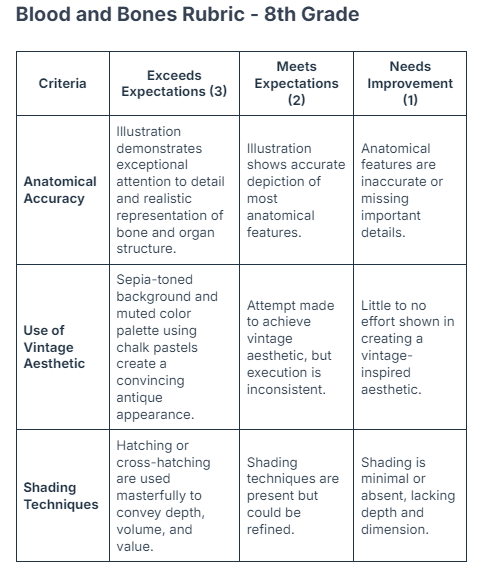
Students will look at reproductions of anatomical illustrations to inspire these gruesome masterpieces. Careful observation are encouraged in order to retain realistic accuracy of the structure of the bones and organs. We will employ a variety of techniques to create a vintage “antique” feel to our drawings, including painting a sepia toned background and using chalk pastels for hints of muted color. Final touches include creating a wire frame around our drawings, and adding optional “blood” splatters. 

This project is from Mrs. Amsler's ArtRoom

https://amslerartroom.wordpress.com/student-work/blood-and-bones/


"Memento Mori"

https://www.tate.org.uk/art/art-terms/m/memento-mori

“Memento mori is a Latin phrase meaning ‘remember you must die’. A basic memento mori painting would be a portrait with a skull but other symbols commonly found are hour glasses or clocks, extinguished or guttering candles, fruit, and flowers.

Closely related to the Memento Mori picture is the Vanitas still life. In addition to the symbols of mortality these may include other symbols such as musical instruments, wine, and books to remind us explicitly of the vanity of worldly pleasures and goods.

The Vanitas and Memento Mori picture became popular in the seventeenth century, in a religious age when almost everyone believed that life on earth was merely a preparation for an afterlife.”


Take a look at the slideshow link below for the intro

https://docs.google.com/presentation/d/1yOV4SLX8N6rN9q45FFb4j8G4MmJ0rijc_xyrKNP46JI/edit#slide=id.p


After looking at the introduction, begin working on your preliminary drawings. You can refer to the two links below for reference images.

Skeletons

Spooky Objects


6th Grade- Watercolor Cells


For our next project we will take a look at plant and animal cells. You are studying cells in your science class so you should have some  background knowledge of cell structure for  this  project. We are going to use watercolor paint and watercolor techniques to help paint your cell  drawing.


DAY 1/2:

Draw your plant or animal cell. USE A PENCIL. DO NOT COLOR ANYTHING YET.


DAY 3:


Today we will discuss some watercolor techniques and paint cells.

Paint your animal or plant cell during this class period. You may use the different techniques any way you would like to complete your project. Paint the whole cell.

After you complete your painting bring it to the drying rack for storage until next week.


AR Standards: CR2.6.1 CR2.6.2 P6.6.1 

7th- Abstract Watercolor Artworks

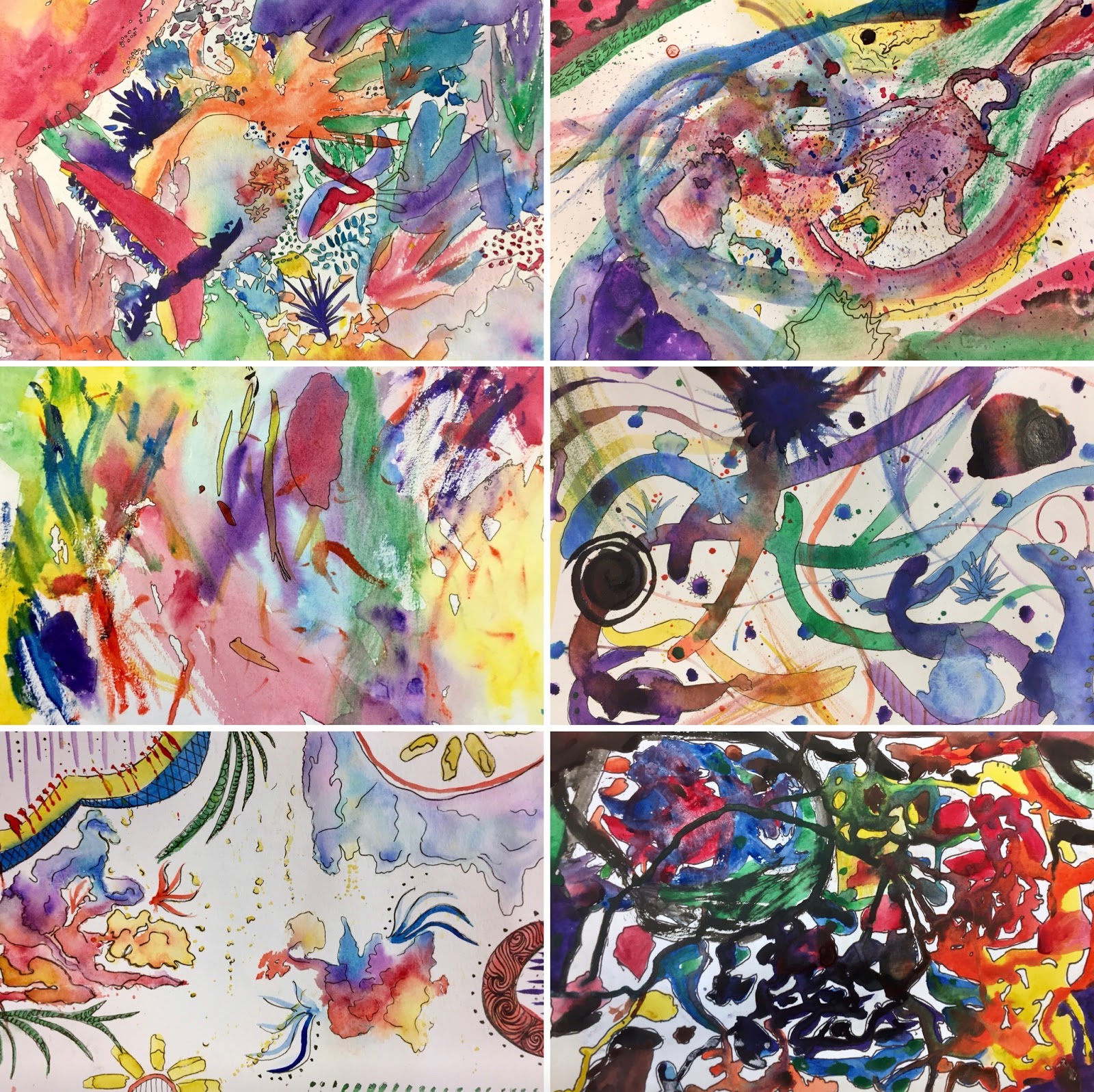
For this project, we will explore watercolor techniques and create two abstract artworks.
We will also take a look at artist, Brandon Boyd, for inspiration for on of the artworks.


Explore


We will practice some watercolor techniques and create an artwork from our exploration today.
We will practice 5 techniques: wet on dry, wet on wet, dry brush, salt resist, and Saran Wrap.

As you explore these techniques, incorporate lines and shapes and colors to create unity, rhythm, and repetition in your artwork. 
After painting, use a fine tip sharpie to outline shapes to create emphasis and detail.


Exploding Books


For our first artwork, we will create an explosion book out of your abstract exploration from the first day. We will watch the video and work together to create the book. You will choose your cover design and the placement of your pieces into the book.


Wet on Wet Abstract Artwork

Our final artwork uses the wet on wet technique to create interesting shapes and colors and uses paint pens to add lines and patterns to an abstract painting, inspired by artist Brandon Boyd. Boyd is the lead singer of the band Incubus, and is a published author and celebrated visual artist. We will take a look at his “Remnants” series for our inspiration. 


Using the wet on wet technique, create spaces of color and shape on your paper. Let the colors blend and flow on their own. After the paint has dried, use paint pens and/or black sharpies to create interesting lines and patterns across the painted areas. 


7th- Pop Art, Andy Warhol, and Candy Bars

What's your favorite candy bar?
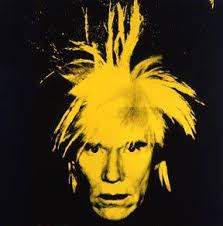
This project takes a look at the Pop Art movement, and the artist Andy Warhol. We will create a pop art piece using our favorite candy bar and watercolors. 


1. Take a look at this site, http://www.mikescandywrappers.com/. It contains A LOT of candy bar wrappers.

2. Choose what candy bar you will paint, save an image and practice creating 4 interesting compositions using Pixlr and the crop tool.

Here are some composition tips


3. Choose your favorite cropped image of your candy bar to enlarge as your pop art piece.

4. Draw your candy bar on the 12x18 piece of watercolor paper. Remember to fill the space and use your printout of your cropped candy bar as a reference to create a dynamic image.

5. Paint your candy bar using watercolor to represent the candy bar as accurately as possible.

6. Add a background of color/patterns to finish your piece. 

8th- Watercolor Nebulas

This project will take a look at science and nebulas in particular, as we learn how to create a watercolor technique called wet on wet. Artists will create two watercolor nebulas and one digital nebula using Pixlr. 


 One watercolor nebula will be a circular design that will be turned in for a collaborative piece to be hung in the building. The other watercolor nebula is up to the artist and may be a different shape. After completing the two paintings, artists will create a nebula painting on the computer using Pixlr.
For the final part of this project, students will type a compare and contrast essay describing the two different painting styles. (digital vs. watercolor)


Speed Painting of Nebulas


Demo of wet on wet


Digital Nebula/Galaxy Videos
These videos will help you create your digital nebula.


8th AR Standards: CR2.8.1 CR2.8.2 P5.8.1 

6th- Paul Klee and Complementary Colors

Our next project takes a look at complementary colors, watercolor painting, and artist Paul Klee. 
Paul Klee was a prolific Swiss and German artist best known for his large body of work, influenced by cubism, expressionism and surrealism.


Take a look at the video and images below to check out Paul Klee


COMPLEMENTARY COLORS 

ANY COLORS THAT ARE DIRECTLY ACROSS FROM EACH OTHER


You will choose one of these three color combinations for your piece.


Artists will create a watercolor painting using a complementary color scheme on book pages, to help as a guide for perpendicular lines.


AR Standards: CR2.6.1 CR2.6.2 R7.6.1 R8.6.1 CN11.6.1